- Home
- Government
- Departments
- Health
- Communicable Diseases
- Tick-Borne Illnesses
Tick-Borne Illnesses
Tick-Borne Diseases are Preventable.
Ticks are common throughout Massachusetts, including here in Concord. These tiny pests can spread diseases like Lyme disease, babesiosis, and anaplasmosis, which can cause serious health issues if not treated. Ticks are most active from spring through fall but can be found year-round in mild weather.
- Protect Yourself
- Wear long pants and long sleeves when working or walking outdoors.
- Permethrin treated clothing is ideal!
- Use insect repellents formulated to repel ticks.
- Perform a daily "tick check" after being outdoors.
- Wear long pants and long sleeves when working or walking outdoors.
When Is Tick Risk the Highest?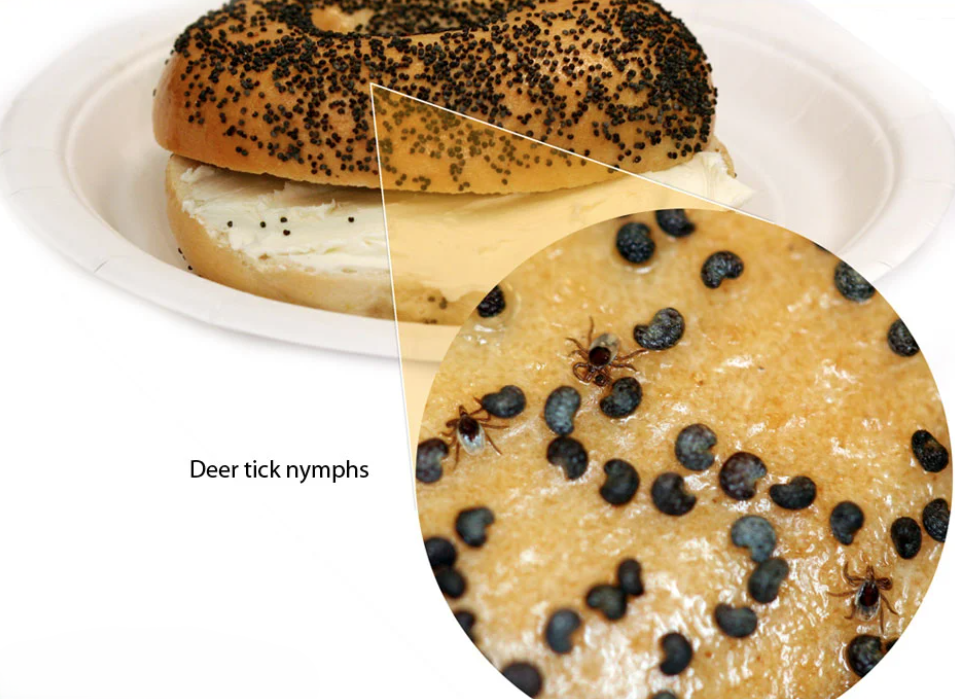
The highest risk of tick-borne diseases is during the summer months, May through August. This is when nymph-stage ticks are most active. Ticks have a two-year life cycle, and after hatching from eggs, they enter the nymph stage during their second spring and summer. Nymphs are extremely small, about the size of a poppy seed, and can be very hard to spot.
Despite their size, nymphs are responsible for most human cases of tick-borne diseases because they are more likely to carry infections and often go unnoticed, staying attached longer. Take extra precautions during these months and always check yourself, children, and pets carefully after spending time outdoors.
Environmental Tick Management
Consider using environmental controls in your yard.
Maintain Your Yard: Keep grass mowed to about 2 inches and trim vegetation close to the ground. Remove leaf litter and underbrush to reduce tick habitats.
Create Barriers: Establish a 3-foot-wide barrier of mulch, woodchips, or gravel between lawns and wooded areas to deter tick migration.
Relocate Recreational Areas: Position playsets, picnic tables, and lawn furniture away from woods, shrubs, and undergrowth.
Discourage Tick-Carrying Wildlife: Reduce habitats for rodents. Limit plants that attract deer and consider incorporating deer-resistant plants like boxwood, sage, and marigolds.
Apply EPA-Approved Perimeter Sprays: Target shaded areas like perennial beds and wooded trails in mid-May and mid-June to eliminate larval and nymphal ticks.
Utilize Tick Tubes: Place biodegradable tubes filled with permethrin-treated cotton around your yard (approximately 24 tubes per acre) twice a year. These tubes target mice, a primary host for ticks, reducing tick populations.
Manage Woodpiles and Bird Feeders: Store woodpiles off the ground and away from your home, and position bird feeders away from the house, providing seed only from December to April to discourage rodents.
Need more information?
- TickEncounter
- Protect your yard – TickEncounter
- Landscaping a Tick Safe Zone
- Tick-borne Diseases | Mass.gov
- Public Health Nurse (Concord)
See our Public Health Nursing webpage for more links: Public Health Nurse (Concord)
Tick Testing
- The Town of Concord has Joined a Tick Testing program through the Great Meadows Public Health Collaborative. Click this link to find out more: Tick Testing
- Ticks can be tested for a small fee to see which disease-causing microbes the tick may be carrying at the through Laboratory of Medical Zoology
- Learn how you can identify tick bites and get them tested for tick-borne disease through Mass.gov: https://www.mass.gov/info-details/tick-identification-and-testing-services.
---------------------------------------------------------------------------------------------------------------------------------------------------------------
View the Concord Health Division's PowerPoint
Understanding and Preventing Tick-borne Diseases
---------------------------------------------------------------------------------------------------------------------------------------------------------------